

Bagel with Cream Cheese Nutrition: Calories, Carbs, and Everything You Need to Know (2026)
Bagel with Cream Cheese Nutrition: The Quick Answer
A plain bagel with cream cheese contains 370 to 410 calories per serving, depending on the size of the bagel and how much cream cheese is spread on it. A standard serving uses one medium bagel (about 4 oz) and two tablespoons of regular cream cheese.
Here is a fast breakdown of the core numbers:
- Calories: 370–410 kcal
- Total Carbohydrates: 45–52 g
- Total Fat: 12–15 g
- Protein: 10–14 g
- Sodium: 440–600 mg
- Dietary Fiber: 2–3 g
These numbers shift depending on the type of bagel, the variety of cream cheese, the portion size, and whether the bagel comes from a grocery store or a fast food chain like Dunkin, Panera Bread, or Einstein Bros Bagels. A full breakdown of each scenario follows below.
What Goes Into a Bagel with Cream Cheese?
Before getting into the numbers, it helps to understand what actually makes up this popular breakfast combination.
A bagel is a round, dense bread made from enriched wheat flour, water, yeast, salt, and a small amount of sugar or malt. What makes it different from regular bread is the process: bagel dough is boiled before it goes into the oven. That boiling step creates the chewy crust and dense interior that bagel lovers recognize immediately.
Cream cheese is a soft, spreadable dairy product made from fresh milk and cream. It is mild, slightly tangy, and high in fat. Regular cream cheese runs around 90 to 100 calories per ounce, most of which comes from fat.
Together, these two ingredients create a combination that is high in carbohydrates from the bagel and high in fat from the cream cheese. That is why the calorie count adds up faster than people often expect.
Bagel with Cream Cheese Nutrition Facts by Bagel Type
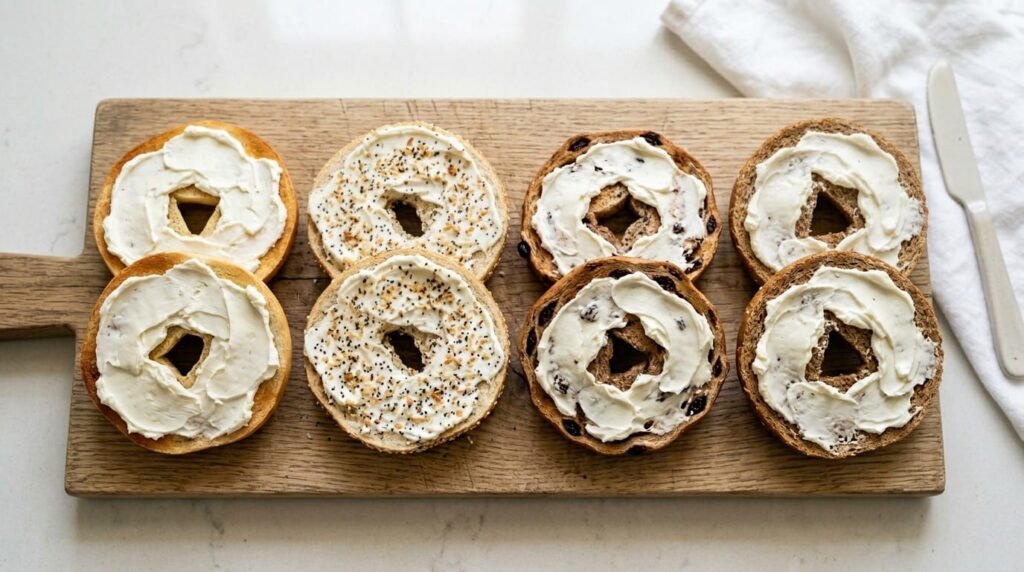
Not all bagels carry the same nutritional profile. The type of bagel changes the calorie, carb, and fiber content noticeably. The table below shows nutrition facts for one medium bagel (4 oz) with two tablespoons of regular cream cheese.
| Bagel Type | Calories | Carbs (g) | Fat (g) | Protein (g) | Fiber (g) |
|---|---|---|---|---|---|
| Plain bagel | 370 | 47 | 12 | 11 | 2 |
| Everything bagel | 390 | 50 | 13 | 12 | 2 |
| Cinnamon raisin bagel | 400 | 54 | 12 | 10 | 2 |
| Whole wheat bagel | 385 | 48 | 12 | 13 | 4 |
| Sesame bagel | 380 | 48 | 13 | 11 | 2 |
| Multigrain bagel | 390 | 49 | 12 | 12 | 5 |
| Mini bagel (2 oz) | 210 | 26 | 8 | 7 | 1 |
Key takeaway: The whole wheat and multigrain options deliver noticeably more dietary fiber — roughly double that of a plain bagel — without adding significantly more calories. If someone is watching their blood sugar or managing weight, fiber makes a meaningful difference in how full they feel after eating.
How Many Calories Does Cream Cheese Add?
Cream cheese is where a bagel’s calorie count can quietly climb. Two tablespoons is considered one standard serving, but many people spread closer to three or four tablespoons without realizing it.
| Cream Cheese Type | Calories (2 tbsp) | Fat (g) | Protein (g) | Carbs (g) |
|---|---|---|---|---|
| Regular (full-fat) | 97 | 10 | 2 | 2 |
| Reduced-fat | 69 | 6 | 3 | 2 |
| Fat-free | 30 | 0 | 4 | 4 |
| Strawberry flavored | 90 | 7 | 1 | 6 |
| Veggie cream cheese | 80 | 7 | 2 | 3 |
| Chive and onion | 85 | 8 | 2 | 2 |
Switching from regular cream cheese to the reduced-fat version saves about 28 calories per serving. That may sound small, but it also cuts fat by nearly 40 percent without dramatically changing the taste or texture. Fat-free cream cheese saves even more calories but has a notably different texture that some people dislike.
Bagel with Cream Cheese Nutrition at Popular Chains
This is where things get more specific — and more useful. Generic nutrition data from USDA databases gives a rough estimate, but chain restaurants often serve larger bagels with more cream cheese than the standard two-tablespoon portion. Here is how several popular chains compare.
| Chain | Bagel Type | Calories | Carbs (g) | Fat (g) | Protein (g) | Sodium (mg) |
|---|---|---|---|---|---|---|
| Dunkin | Plain + plain cream cheese | ~410 | 65 | 13 | 13 | 730 |
| Dunkin | Everything + plain cream cheese | ~460 | 70 | 15 | 14 | 890 |
| Dunkin | Whole wheat + plain cream cheese | ~430 | 68 | 12 | 14 | 700 |
| Panera Bread | Plain bagel + plain cream cheese | ~440 | 73 | 12 | 15 | 760 |
| Einstein Bros | Plain bagel + plain cream cheese | ~450 | 72 | 14 | 14 | 810 |
| Generic / homemade | Plain bagel + 2 tbsp cream cheese | ~370 | 47 | 12 | 11 | 440 |
One thing these numbers reveal clearly: chain bagels are noticeably larger than the standard grocery-store size, which is why their calorie counts run 60 to 80 calories higher than a homemade version. The sodium content is also significantly higher at fast food chains, which matters for people managing blood pressure.
Is a Bagel with Cream Cheese Healthy?
The honest answer is: it depends on the rest of the diet and the portion size.

A single plain bagel with a moderate amount of cream cheese provides real nutritional value. It delivers steady energy from complex carbohydrates, calcium from the cream cheese, iron from the enriched flour, and a decent amount of protein to start the day.
However, a standard bagel is refined-grain bread. It is low in fiber, high in simple carbohydrates, and can raise blood sugar relatively quickly — especially when eaten on its own without protein or fat on the side. The cream cheese adds saturated fat, which is fine in moderation but worth monitoring for people with heart health concerns.
The bottom line: A bagel with cream cheese fits well into a healthy diet when portion sizes are controlled and it is balanced with other nutrient-dense foods throughout the day. Someone eating a 370-calorie plain bagel with cream cheese as breakfast is making a reasonable food choice. Someone eating a 460-calorie everything bagel with four tablespoons of cream cheese every single morning while staying sedentary is taking in more calories and saturated fat than is ideal.
Choosing a whole wheat or multigrain bagel adds fiber, which slows digestion and helps maintain steadier blood sugar levels. Choosing reduced-fat cream cheese cuts saturated fat without sacrificing too much flavor.
Macronutrient Breakdown: What Each Component Contributes
Understanding where the calories come from helps people make smarter decisions about how to build this meal.
Carbohydrates come almost entirely from the bagel. A medium plain bagel provides roughly 45 grams of carbohydrates, which makes up about 15 percent of the daily recommended intake based on a 2,000-calorie diet. For most people eating a standard diet, this is fine. For people on low-carb or ketogenic diets, a single bagel already exceeds the daily carb limit.
Fat comes primarily from the cream cheese. Two tablespoons of regular cream cheese contributes about 10 grams of total fat, of which roughly 6 grams are saturated fat. The bagel itself adds minimal fat — less than 2 grams in most cases.
Protein is split between both components. The bagel provides about 8 to 10 grams from the gluten in the wheat flour. Cream cheese adds another 2 grams. For a breakfast food, this protein level is moderate but not exceptional. Adding a side of eggs or smoked salmon significantly boosts the protein content.
Sodium is a notable concern, particularly at chain restaurants. A plain grocery-store bagel might have 400 to 450 mg of sodium. A chain bagel with cream cheese can reach 700 to 900 mg — nearly half the daily recommended limit of 2,300 mg — in a single meal.
Bagel with Cream Cheese vs. Other Common Breakfasts
Putting the nutrition facts in context helps clarify where a bagel with cream cheese actually stands.
| Breakfast | Calories | Carbs (g) | Protein (g) | Fat (g) |
|---|---|---|---|---|
| Bagel + cream cheese | 370–410 | 47–52 | 11–14 | 12–15 |
| Two slices of toast + butter | 230–280 | 32–36 | 7–9 | 10–14 |
| Oatmeal with milk and honey | 280–320 | 52–58 | 10–12 | 5–7 |
| Eggs and avocado on toast | 370–420 | 28–34 | 18–22 | 22–26 |
| Greek yogurt with granola | 320–370 | 42–50 | 18–22 | 8–12 |
| Croissant with butter | 310–360 | 32–38 | 6–8 | 18–22 |
Compared to eggs and avocado on toast, a bagel with cream cheese has similar calories but significantly more carbohydrates and much less protein. The protein difference matters for satiety — higher protein breakfasts tend to keep hunger away for longer.
Compared to a buttered croissant, a bagel with cream cheese actually has fewer grams of fat and more protein, which surprises many people since bagels feel more substantial.
How to Make a Bagel with Cream Cheese a Smarter Meal
Small swaps create meaningful nutritional differences without making breakfast feel like a compromise.
Choose the right bagel. A whole wheat or multigrain bagel adds 2 to 3 grams of extra fiber compared to a plain bagel. That fiber slows digestion, reduces the blood sugar spike, and keeps hunger away for longer.
Control the cream cheese portion. Two tablespoons is the recommended serving size. Most people spread two to three times that amount. Measuring once or twice builds an accurate mental picture of what a real portion looks like.
Go for reduced-fat cream cheese. The calorie savings per serving are modest (about 28 calories), but the fat reduction is meaningful. Reduced-fat versions still taste creamy and spread easily.
Add protein. A bagel with cream cheese is relatively low in protein for a breakfast food. Adding two to three ounces of smoked salmon (lox) adds 16 grams of protein and omega-3 fatty acids. Adding a sliced hard-boiled egg adds another 6 grams of protein for roughly 80 extra calories.
At a chain like Dunkin, order strategically. The plain bagel at Dunkin is the lowest-calorie option at around 320 calories before cream cheese. The whole wheat bagel adds fiber. Asking for “light” cream cheese, when available, reduces the fat content. Pairing the bagel with black coffee instead of a latte eliminates an extra 100 to 200 calories from the morning.
Bagel with Cream Cheese and Specific Dietary Needs
For weight management: A bagel with cream cheese is calorie-dense relative to its volume. Portion control is the most effective tool. Eating a half bagel with cream cheese — roughly 185 to 210 calories — is a practical way to enjoy the flavor without the full calorie load.
For people managing blood sugar: The glycemic index of a standard white bagel is high. Choosing whole wheat, pairing the bagel with protein, and using a smaller portion all help reduce the glucose response. People with type 2 diabetes should discuss specific portion targets with a registered dietitian.
For heart health: Sodium is the primary concern at chain restaurants. A 700 to 900 mg sodium count from a single breakfast item is significant. Cream cheese also contributes saturated fat, which, in excess, is associated with elevated LDL cholesterol. Reduced-fat cream cheese and home-prepared bagels with lower sodium flour help address both concerns.
For high-protein or muscle-building diets: A bagel with cream cheese is not an ideal high-protein breakfast on its own. Adding lox, eggs, or low-fat cottage cheese alongside the cream cheese creates a more protein-balanced meal.
For gluten-free diets: Standard bagels contain wheat and are not suitable for people with celiac disease or gluten sensitivity. Some specialty brands offer gluten-free bagels made from rice flour or almond flour, though the texture and taste differ significantly from traditional wheat bagels.

Frequently Asked Questions
How many calories are in a bagel with cream cheese?
A plain medium bagel with two tablespoons of regular cream cheese contains approximately 370 to 410 calories.
How many carbs are in a bagel with cream cheese?
Expect 45 to 52 grams of carbohydrates in a standard serving, with most coming from the bagel itself.
How much protein is in a bagel with cream cheese?
A typical serving delivers 10 to 14 grams of protein from both the bagel and the cream cheese combined.
Is a bagel with cream cheese healthy?
Yes, in moderation — it provides energy, calcium, and protein, though it is low in fiber and high in sodium if ordered from a chain.
Does toasting a bagel change its calories?
No — toasting changes the texture but does not alter the calorie, carb, fat, or protein content of the bagel.
Which cream cheese has the fewest calories?
Fat-free cream cheese has the fewest calories at around 30 per two tablespoons, followed by reduced-fat at approximately 69 calories.
How many calories does cream cheese add to a bagel?
Two tablespoons of regular cream cheese adds roughly 90 to 100 calories to the bagel.
Is a bagel with cream cheese keto-friendly?
No — a standard bagel contains 45 to 55 grams of carbohydrates, which far exceeds the daily carb limit on a ketogenic diet.
Which chain serves the lowest-calorie bagel with cream cheese?
Among major chains, Dunkin’s plain bagel with cream cheese comes in at around 410 calories, making it one of the lower options compared to Panera and Einstein Bros.
Can you eat a bagel with cream cheese every day?
Yes, as part of a balanced diet — but daily intake of a chain-sized serving adds up in sodium and saturated fat, so variety in the morning routine is advisable.
The Bottom Line on Bagel with Cream Cheese Nutrition
A bagel with cream cheese is one of the most popular breakfast foods in the United States, and the nutrition facts support why it has stayed that way for decades. It is satisfying, fast, and genuinely tasty. The calorie range of 370 to 410 calories for a standard serving fits into most daily calorie budgets without issue.
The areas to pay attention to are sodium (especially at chains), the type of bagel (whole wheat beats white on fiber), and the amount of cream cheese spread on top. Small, deliberate choices — a whole wheat bagel, two measured tablespoons of reduced-fat cream cheese, a side of black coffee — turn an already enjoyable breakfast into a genuinely smart one.
Whether it comes from Dunkin on a busy weekday morning or from a fresh bakery on a slow weekend, a bagel with cream cheese remains a classic American breakfast worth understanding — and worth eating.