Why Better Takeaway Packaging Matters for Coffee and Breakfast Runs
There is something very familiar about the morning coffee run.
One person wants a hot coffee. Someone else adds a donut. Another grabs a breakfast sandwich or a muffin for the office. By the time the order reaches the counter, there may be several drinks, food boxes, bags and napkins to carry.
The food itself may be excellent, but the way that order is packed can change the experience quite a bit.
A coffee that is awkward to carry, a pastry that gets squashed, or a sandwich that slides around inside the wrong-sized box can turn a simple breakfast into a minor hassle. That is one reason takeaway packaging has become a more noticeable part of the café and fast-food experience in 2026.
The Morning Rush Leaves Little Room for Mistakes
Breakfast service is different from a quiet afternoon coffee break.
Orders come quickly, customers may be heading to work, and staff need to assemble food without slowing down the queue. Packaging has to keep up.
A good package should be easy to open, easy to fill and easy to close. Staff should not have to spend extra time adjusting a box because the sandwich does not fit properly or trying to find a bag large enough for an order with multiple items.
Small delays may seem harmless, but they become expensive when they happen dozens of times during a busy morning.
That is why packaging design is often as much about workflow as appearance.
Coffee Cups Have a Bigger Job Than Holding Coffee
A takeaway coffee cup seems simple until you are walking with one.
The cup needs to handle a hot drink safely, work with the correct lid and feel comfortable enough to hold. If the outside becomes too hot or the lid feels unreliable, customers notice immediately.
This becomes even more important when drinks come in different formats. A café may serve hot coffee alongside iced coffee, cold brew, frozen drinks or specialty beverages, each with slightly different packaging needs.
The goal is not to make every cup look premium.
It is to make the drink easy to carry and dependable from the moment it leaves the counter.
Food Packaging Can Protect the Small Details
Breakfast foods are often more delicate than they look.
A donut with icing can easily pick up marks if it is packed too tightly. A muffin can lose its shape when squeezed into a small bag. A breakfast sandwich may arrive compressed if the box gives it too much room to move or puts pressure on the top.
The same problem appears with pastries.
People eat with their eyes first, especially with products that are bought as an occasional treat rather than a basic necessity. A pastry arriving neatly packed in an exquisite bakery box feels different from one that looks like it has been pushed around in a paper bag.
Packaging cannot improve the food itself, but it can help preserve what the kitchen created.
Bigger Packaging Is Not Automatically Better
It is tempting for food businesses to use one oversized container for several different products.
That sounds efficient, but it can create other problems.
Food moves more when there is empty space. A sandwich can slide to one side, pastries can knock into each other and smaller items may end up buried beneath larger ones.
A better fit usually means a more stable order.
The same principle applies to bags. A bag needs enough space for the actual order without becoming so large that everything moves around inside it.
For businesses serving a high volume of takeaway orders, these small design decisions can have a surprisingly large effect.
Combo Orders Need Some Thought
A coffee and donut are easy to handle separately.
Add a breakfast sandwich, hash browns and another drink, and the order becomes a different packaging problem.
Fast-food and coffee brands increasingly have to think about how several products travel together. Drinks should remain upright. Hot food should not be crushed. Small items should be easy to find. Nothing should shift so much during transport that the customer opens the bag to find a completely rearranged breakfast.
This matters even more for delivery.
A meal that travels only a few minutes from the counter to a customer’s hand has a much easier journey than one that spends twenty or thirty minutes on the road.
Takeaway Packaging Is Also Part of the Brand
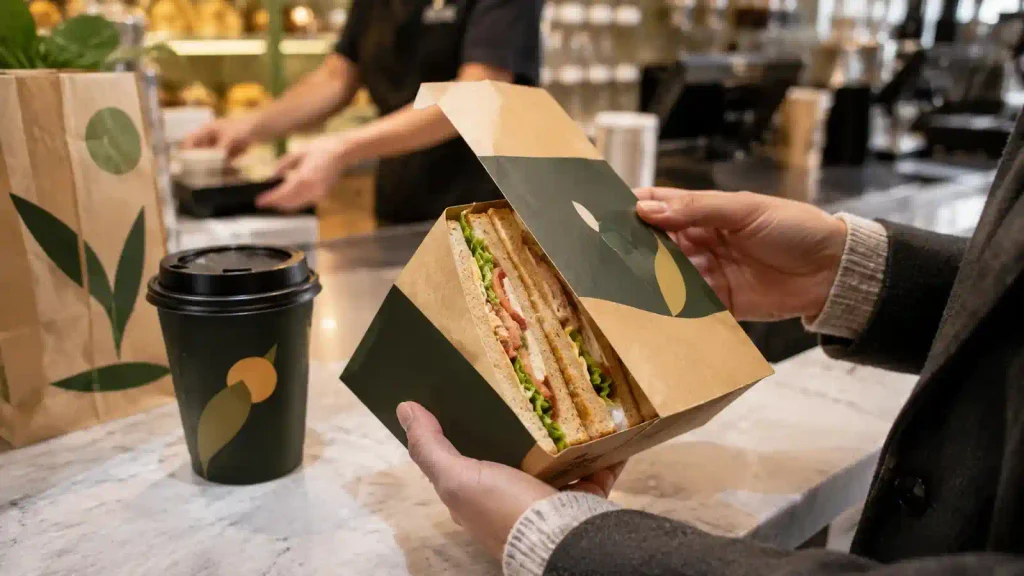
Customers may not consciously think, “That packaging was well designed.”
They simply notice that the order felt easy.
The bag was sturdy. The drink was secure. The sandwich stayed intact. The donut looked the way it did when it was ordered.
Those details contribute to the overall impression of the business.
For large chains, consistency is especially important. Customers know what to expect, and packaging is one of the physical details that helps reinforce that familiarity.
That does not mean every package needs a giant logo or elaborate printing. Clean, consistent packaging can be more effective than something overly decorated.
Sustainability Has to Work in the Real World
There is also growing pressure to think about what happens to takeaway packaging after the meal is finished.
Paper, fibre-based materials, recyclable structures and reusable systems all have a place, but the right choice depends on the application and the local waste system.
A package that is difficult to use or causes more damaged food is not necessarily a better solution just because it sounds environmentally friendly.
For food businesses, the more useful approach is to look at the whole picture: how much material is needed, how well the package protects the food, how it affects transport and storage, and what customers can realistically do with it after use.
The Best Packaging Usually Goes Unnoticed
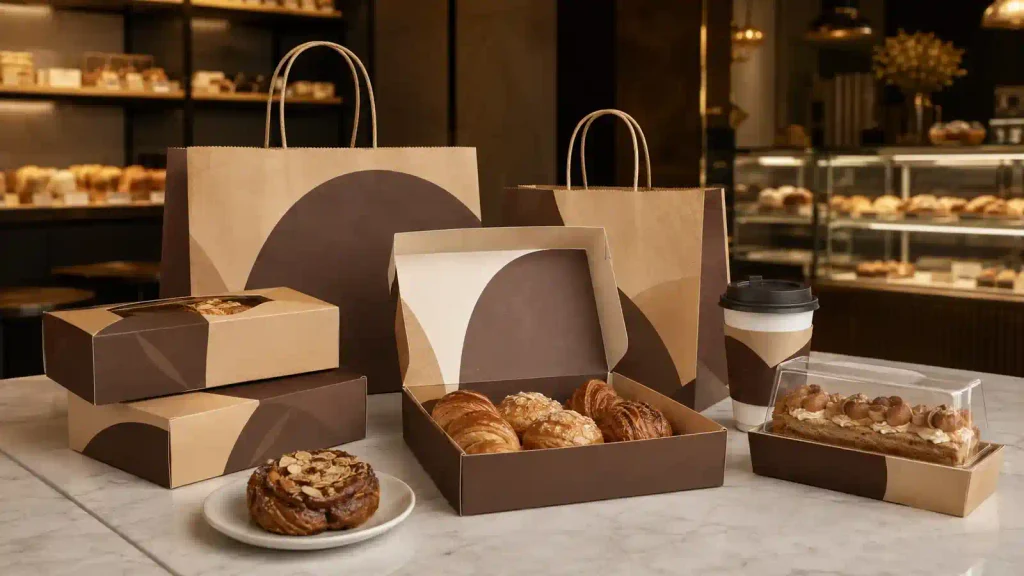
Nobody visits a coffee shop because they are excited about the takeaway bag.
They go for the coffee, donut, breakfast sandwich or whatever they are craving that morning.
That is exactly why good packaging should make itself almost invisible.
It should keep the drink secure, protect the food, speed up the handoff and make the order easy to carry. When it does those things without creating extra fuss, the customer simply gets a better experience.
For coffee shops and fast-food brands, that is probably the real value of upgrading takeaway packaging in 2026.
Not making the packaging the star.
Just making sure breakfast arrives the way it was meant to.