Dunkin’s Boston Kreme Donut: What It Is, What’s Inside, and Why It’s Spelled That Way
You have ordered the Boston Kreme dozens of times. But every page online gives you a calorie count and nothing else. Nobody explains why it is spelled “Kreme” instead of “Cream,” what is actually in the filling, or how this donut ended up with a formal government proclamation behind it. This article covers all of it — the real history, the full ingredient breakdown, and what the nutrition numbers actually mean for a person eating one.
What Is the Boston Kreme Donut?
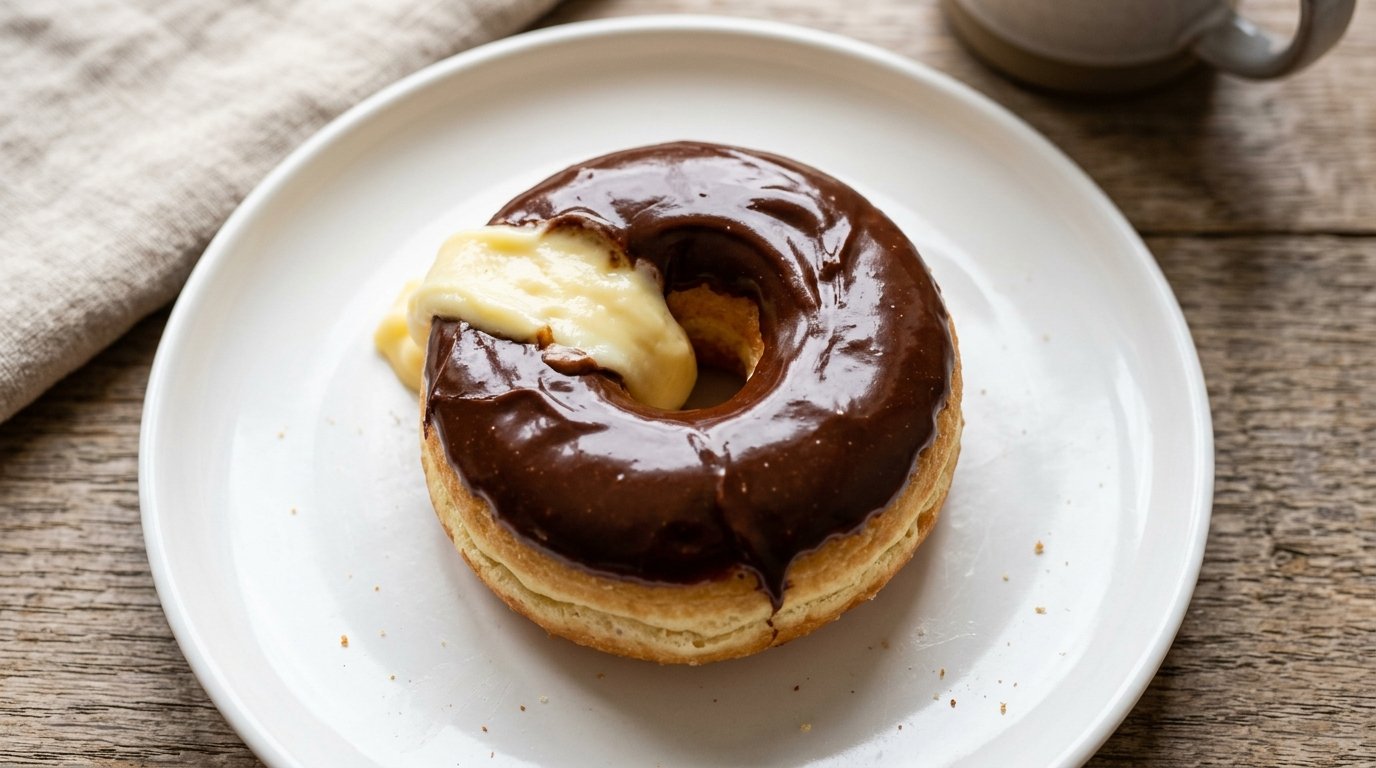
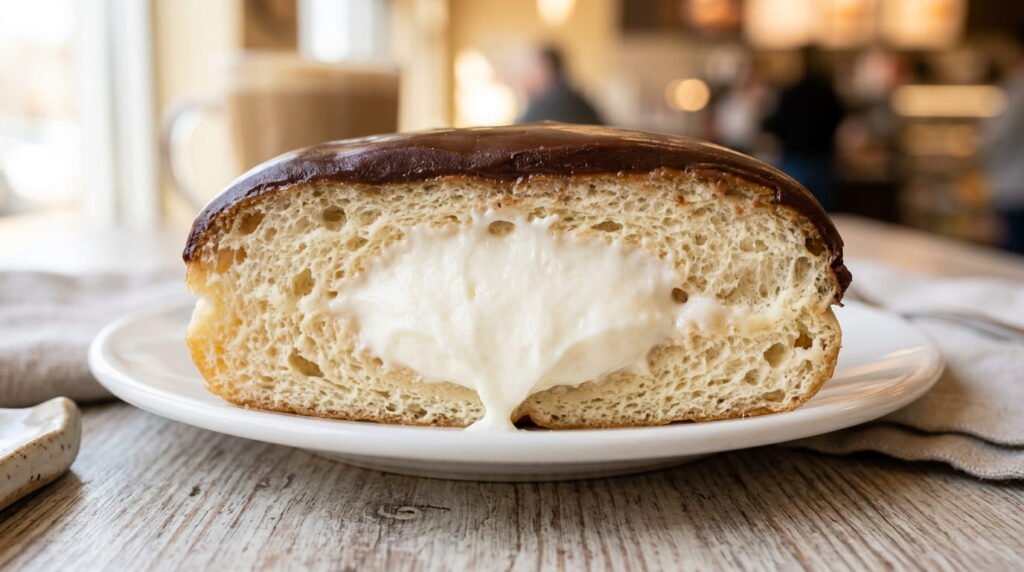
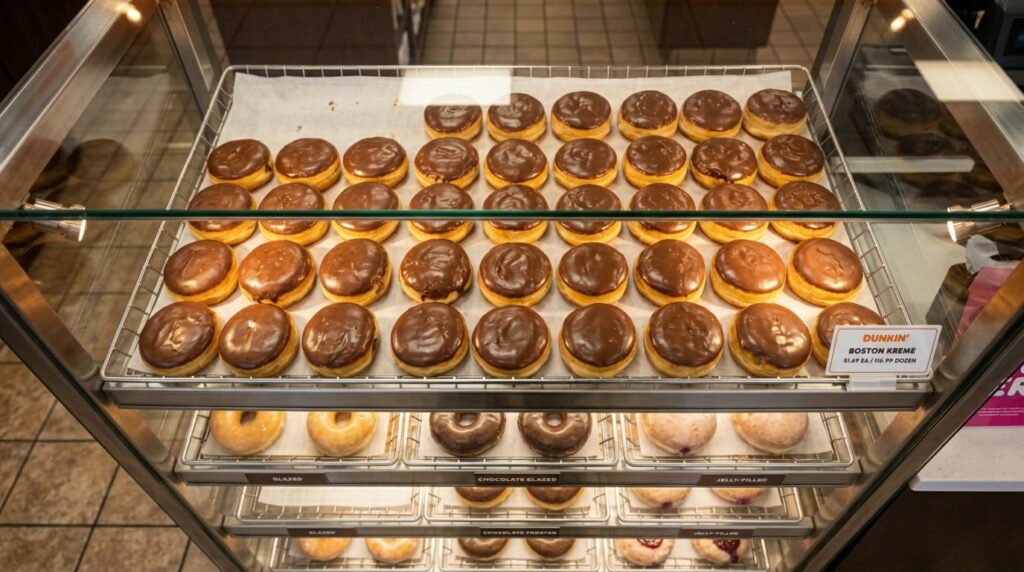
The Boston Kreme is a yeast-raised donut filled with Bavarian Kreme and topped with chocolate icing. It is one of Dunkin’s top-selling items and has been on the menu for decades. The donut is round and solid — no hole in the center — which allows room for the cream filling inside.
The filling is pumped in through the side after frying. The chocolate icing is applied on top, creating three distinct layers: the soft yeast dough, the sweet Bavarian Kreme center, and the dark chocolate glaze.
You can check the current price and full donut lineup on the Dunkin donut menu with prices.
Why It’s Spelled “Kreme” and Not “Cream”
This is the question zero competitor pages answer. The spelling is deliberate. Dunkin uses “Kreme” as a branded term across its entire filled donut line — Bavarian Kreme, Vanilla Kreme, Chocolate Kreme — to signal that these fillings are not traditional dairy pastry cream.
Traditional Boston Cream Pie uses a custard-based pastry cream made with egg yolks, milk, sugar, and flour cooked on the stove. Dunkin’s Bavarian Kreme filling uses a different formulation: water, corn syrup, modified food starch, and palm oil as the base, with preservatives added for shelf stability.
The “Kreme” spelling creates a legal and product distinction. It tells the customer this is an inspired version — not a direct replica of the pastry. The donut gets the flavor association of Boston Cream Pie without making a claim it cannot back up with its actual ingredient list.
The History of the Boston Kreme at Dunkin
From Bavarian Kreme Roots to a Massachusetts Icon
The Boston Kreme’s history runs deeper than most people realize. In 1976, Rick Golden — who later became Dunkin’s Manager of Donut Excellence — learned to make Bavarian Kreme donuts by hand. That technique formed the foundation of what became the Boston Kreme.
The donut built a following in New England over the following decades. By 2003, its cultural status was official: the Massachusetts Senate and the House of Representatives named the Boston Kreme the official donut of the Commonwealth. That distinction still stands today.
The 2001 Recipe Reformulation
In 2001, after three years of development in Dunkin’s internal test kitchen — which the company called the “doughnut lab” — Dunkin replaced its yeast-raised donut recipe across all varieties, including the Boston Kreme. The goal was consistency across thousands of franchise locations.
The reformulated dough used a yeast donut concentrate, which standardized texture and fry performance at scale. This was a significant shift: moving from hand-crafted variation to a repeatable, centralized formula that any franchise operator could execute reliably.
What’s Actually Inside a Boston Kreme Donut
Most pages list the nutrition numbers. Almost none explain what the ingredients actually are. Here is a plain-language breakdown of all three components.
| Component | Key Ingredients | What to Know |
| Yeast Dough | Enriched wheat flour, palm oil, yeast concentrate, enzymes, dextrose | Yeast-raised means lighter and airier than cake donuts. Palm oil is used for frying stability. |
| Bavarian Kreme Filling | Water, sugar, corn syrup, modified food starch, palm oil, agar, potassium sorbate, sodium benzoate | Not pastry cream. Potassium sorbate and sodium benzoate are preservatives that extend shelf life. Agar (a seaweed extract) is the thickener. |
| Chocolate Icing | Sugar, water, cocoa, high fructose corn syrup, soybean oil | Sugar is the first ingredient, meaning it outweighs everything else in the icing by weight. |
Allergen Information
The Boston Kreme donut contains egg, milk, soy, and wheat. It does not contain peanuts, shellfish, or tree nuts, though Dunkin uses shared equipment which means cross-contact is possible. For the full allergen breakdown of Dunkin’s menu, see the Dunkin allergen menu.
Boston Kreme Donut Nutrition Facts
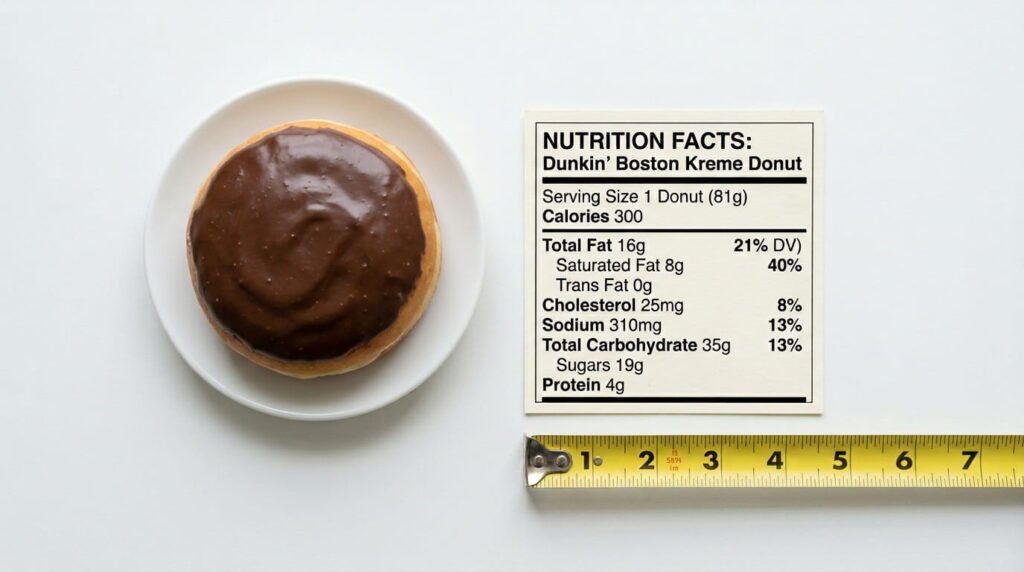
One Boston Kreme donut contains 270 calories. Here is the full macronutrient breakdown and what each number means in context.
| Nutrient | Amount Per Donut | % Daily Value | Context |
| Calories | 270 | — | Mostly from carbohydrates (56%) and fat (37%) |
| Total Fat | 11g | 14% | Includes palm oil from the dough and icing |
| Saturated Fat | 4.5g | 23% | That is nearly a quarter of the recommended daily limit |
| Total Carbohydrates | 39g | 14% | Includes both natural and added sugars |
| Added Sugars | 17g | 34% | 26% of total calories come from added sugars alone |
| Protein | 5g | 10% | From egg and milk ingredients in the dough |
| Sodium | 310mg | 13% | From the yeast concentrate and preservatives |
The saturated fat figure is the one to pay attention to. At 4.5g, one Boston Kreme donut delivers 23 percent of the FDA’s recommended daily limit for saturated fat. That is significant for a single item. The added sugars — 17g — represent 34 percent of the daily limit based on a 2,000-calorie diet. Use the Dunkin nutrition facts page to compare this against other items on the menu.
For a full picture of what you order at Dunkin’, the Dunkin breakfast menu shows how the Boston Kreme compares to sandwiches and other morning items.
The Boston Scream Donut — Seasonal Halloween Variant
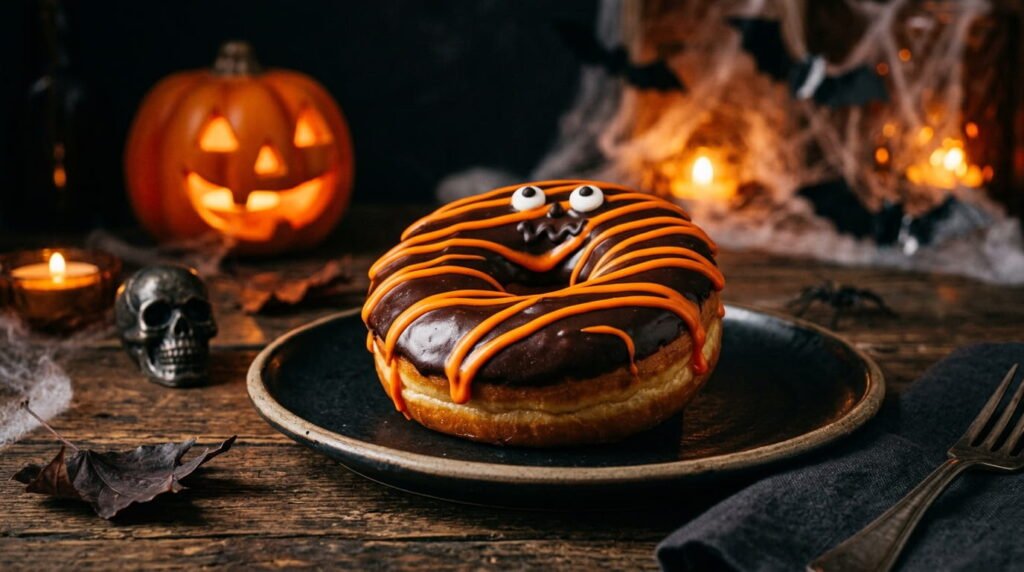
Each year around Halloween, Dunkin converts the Boston Kreme into the Boston Scream Donut. The base donut stays identical — same yeast dough, same Bavarian Kreme filling, same chocolate icing. The only change is a drizzle of orange icing applied on top.
The Boston Scream Donut is a limited-time item. It appears on the seasonal menu each fall and is not available year-round. The orange drizzle adds no meaningful flavor difference — it is a visual upgrade designed for the season.
Dunkin rotates seasonal items consistently through the year. See what else changes on the Dunkin holiday and seasonal menu.
The Boston Kreme Around the World
Despite the local-sounding name, the Boston Kreme sells in 32 countries worldwide. Dunkin also offers Boston Kreme Munchkins — the bite-sized version — and has sold Boston Kreme Muffins at participating locations.
The global reach creates an interesting contrast. The name implies Boston. The product is international. The spelling signals it is not the original pastry. The donut has become bigger than its origin story — a branded item that carries the cultural weight of New England without being confined to it.
Frequently Asked Questions
What is inside a Dunkin Boston Kreme donut?
A yeast donut filled with Bavarian Kreme and topped with chocolate icing.
How many calories are in a Dunkin Boston Kreme donut?
270 calories per donut, with 11g fat, 39g carbs, and 5g protein.
Is the Boston Kreme filling real cream?
No. It uses Bavarian Kreme — a sweetened filling made with corn syrup, modified food starch, and palm oil, not traditional dairy pastry cream.
Why is it spelled “Kreme” and not “Cream”?
Dunkin uses “Kreme” as a branded spelling across its filled donut line to distinguish them from traditional pastry cream and from the original Boston Cream Pie dessert.
Is the Boston Kreme donut available year-round?
Yes. The standard version is available year-round. A seasonal Halloween edition — the Boston Scream Donut with orange icing drizzle — appears each fall.
Does the Boston Kreme contain dairy?
Yes. The yeast concentrate contains nonfat dry milk, whey, and sodium caseinate. It is not dairy-free.