
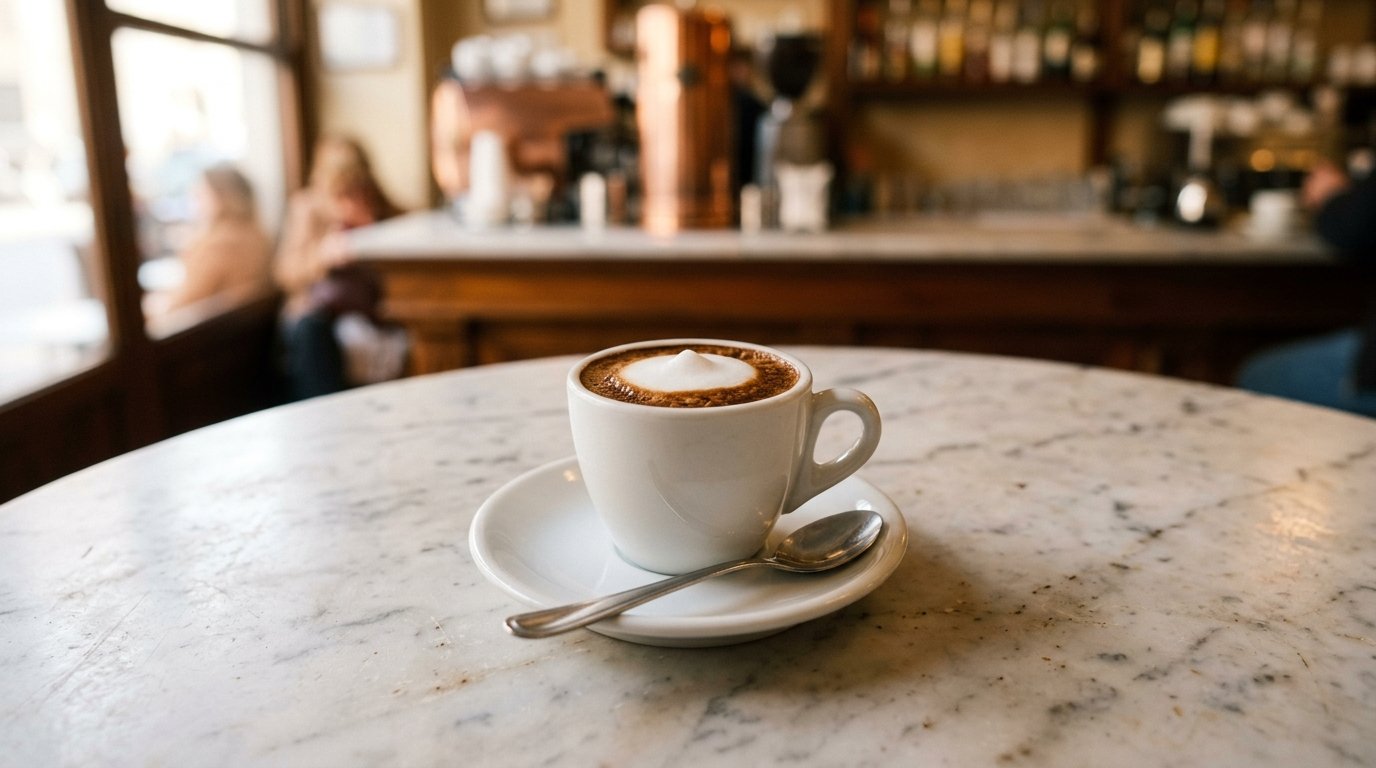
What Is a Macchiato? Types, History, and How It’s Made
Order one in Rome and you get two sips. Order one at Starbucks and you get a 16oz layered drink. Nobody explains why — until now.
Key Takeaways
- Macchiato means “stained” in Italian — espresso marked with just a touch of milk.
- There are three main types: espresso macchiato, latte macchiato, and caramel macchiato.
- The caramel macchiato was invented by Starbucks in 1996 and is almost nothing like the original.
- A traditional macchiato has roughly 85mg of caffeine and only 10–25 calories.
- What you get when you order one depends heavily on where you order it.
You’ve seen the word “macchiato” on coffee menus dozens of times. You’ve probably ordered one without being entirely sure what sets it apart from a latte or a cappuccino. Maybe you ordered one in Italy and got a tiny two-sip cup, then walked into a Starbucks the next week and received a tall, layered, vanilla-scented drink that barely resembled it. Both were called macchiatos.
That confusion is real, and almost no article on the internet properly resolves it. This guide covers what a macchiato actually is, where the name comes from, every type you’ll encounter, the full story behind the caramel macchiato, and how to make a proper one at home — without a product pitch in the middle of it.
What Does “Macchiato” Mean?
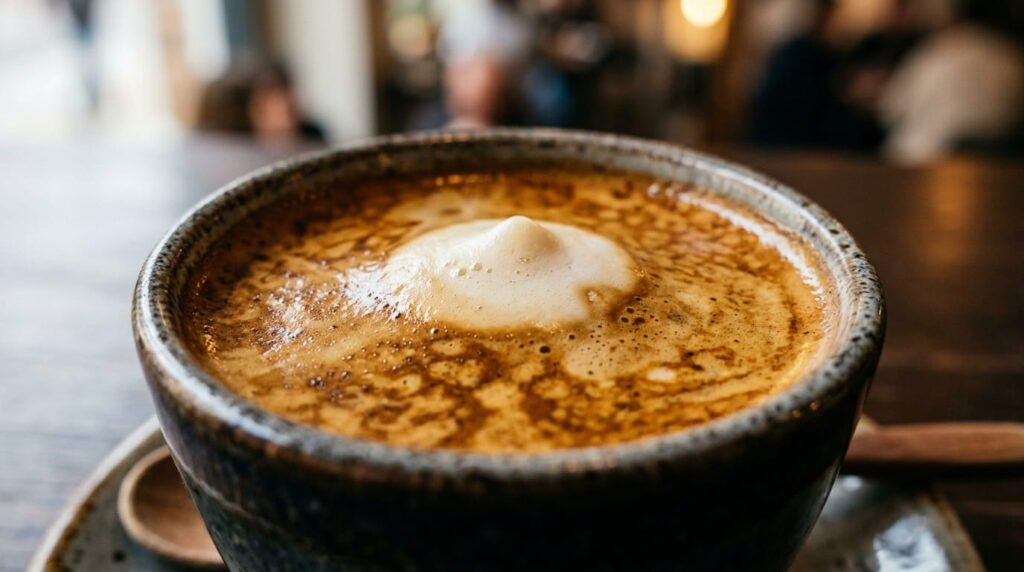
Macchiato is an Italian word that translates directly to “stained” or “spotted.” In coffee terms, it describes an espresso shot that has been stained — marked — with a small amount of milk or milk foam. That’s the entire idea. The milk doesn’t dominate the drink. It barely enters it. Its job is to soften the sharpest edge of the espresso without taking over the flavor.
An average size espresso Macchiato is in a demitasse cup that is normally 2-3 oz in size. The espresso is poured in first, followed by a small spoonful of foamed milk topped on it – not too much or it will not leave a space on the surface. The macchiato is that. The recipe of the drink is its name.
A macchiato is an Italian espresso drink made by pulling a shot of espresso and adding a small dollop of steamed or frothed milk on top. The word means “stained” — the milk stains, or marks, the espresso. It’s smaller and bolder than a latte, served in a 2–3 oz cup, with the espresso flavor firmly in charge.
The Origin of the Macchiato — Why Baristas Invented It
The macchiato wasn’t born out of a desire to create a new coffee experience. It was born out of a practical problem on a busy Italian café floor.
In traditional Italian espresso bars, baristas would pull shots continuously and line them up for servers to carry to tables. The problem was simple: a plain espresso and an espresso with a tiny bit of milk looked identical in the cup. Servers constantly mixed them up. So baristas began marking the milk-touched cups with a small dollop of foam — a visible signal that this one had milk in it. The marked cup became the macchiato. The name stuck, and eventually the method itself became the drink.
From the counter The first time someone fully explained this to me, it was a barista at a small espresso bar who had trained in Naples. She said it plainly: “The macchiato wasn’t invented for customers. It was invented so we could tell our own drinks apart.” That reframe changed how the drink tasted — suddenly it made complete sense why it’s so small, so simple, and so espresso-forward.
This origin is why the macchiato holds a unique position in Italian coffee culture. Unlike the cappuccino — considered a morning drink in Italy — the macchiato is regarded as the perfect afternoon coffee. It has enough milk to round out the bitterness of an afternoon espresso shot without the heaviness of a full milk drink. Italians typically wouldn’t order a cappuccino after 11am, but a macchiato is fair game all day.
Types of Macchiato — The 3 You Need to Know
Today the word “macchiato” covers a spectrum of drinks that share a name but little else. Understanding which type you want before you order will save you a lot of confusion at the counter.
| Type | What’s In It | Size | Flavor Strength |
|---|---|---|---|
| Espresso Macchiato | Espresso + small milk foam dollop | 2–3 oz | Very bold |
| Latte Macchiato | Steamed milk + espresso poured through foam | 8–12 oz | Mild, layered |
| Caramel Macchiato | Vanilla syrup + steamed milk + espresso + caramel drizzle | 12–24 oz | Sweet, mild |
Espresso Macchiato (Caffè Macchiato)
This is the original. A single or double shot of espresso goes into a small cup, and a spoonful of milk foam is placed directly on top — just enough to leave a mark. The ratio is roughly 4:1 espresso to milk. The espresso drives every sip. The milk rounds the edge slightly. Nothing else. If you order a macchiato in Italy, this is what you’ll get.
If you’re exploring the full espresso-based drinks available at Dunkin’, you can check the Dunkin’ Coffee Menu and the Dunkin’ Drink Menu for their current espresso and macchiato lineup with prices.
Latte Macchiato
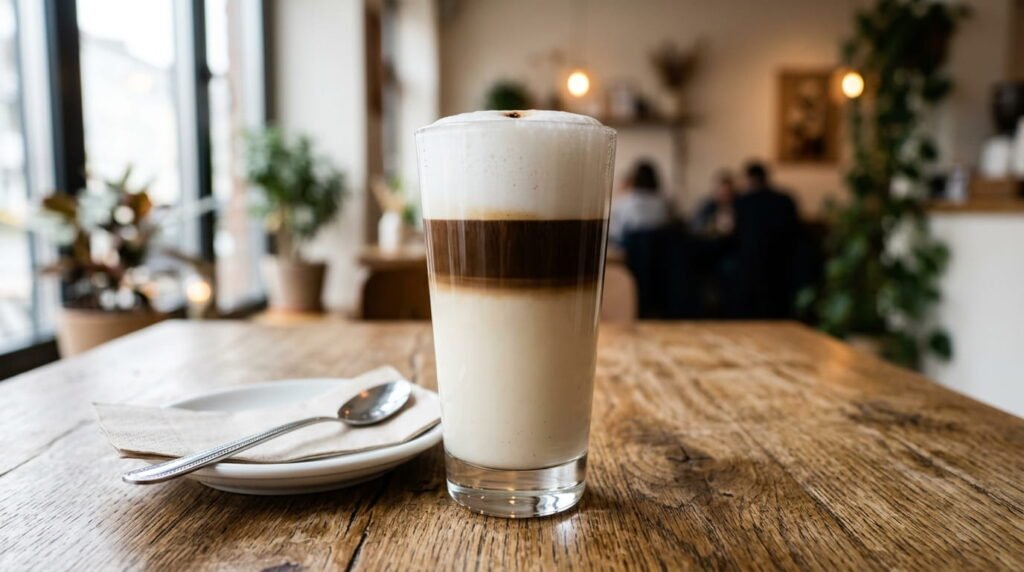
The latte macchiato flips the formula. You do not add milk to espresso but add espresso to milk. The tall glass is filled with the steamed milk then a shot of espresso is added slowly without disturbing the foam layer so that it is between the milk and the foam layer. The result is a beautiful three-tier visual — foam on top, espresso in the middle, milk below — and a much gentler, milkier flavor than a caffè macchiato.
This is the drink that gave birth to the caramel macchiato. And it’s also the drink that confuses most people ordering at chains, because it looks dramatic but tastes mild.
Real-world note The first time I ordered a latte macchiato expecting something close to the traditional version, I was caught off guard by how creamy and soft it tasted. It’s genuinely a different drink — closer to a latte in experience than anything a traditional Italian barista would recognize as a macchiato. If you love bold coffee, be specific with your order.
Caramel Macchiato — and Its Surprising Origin
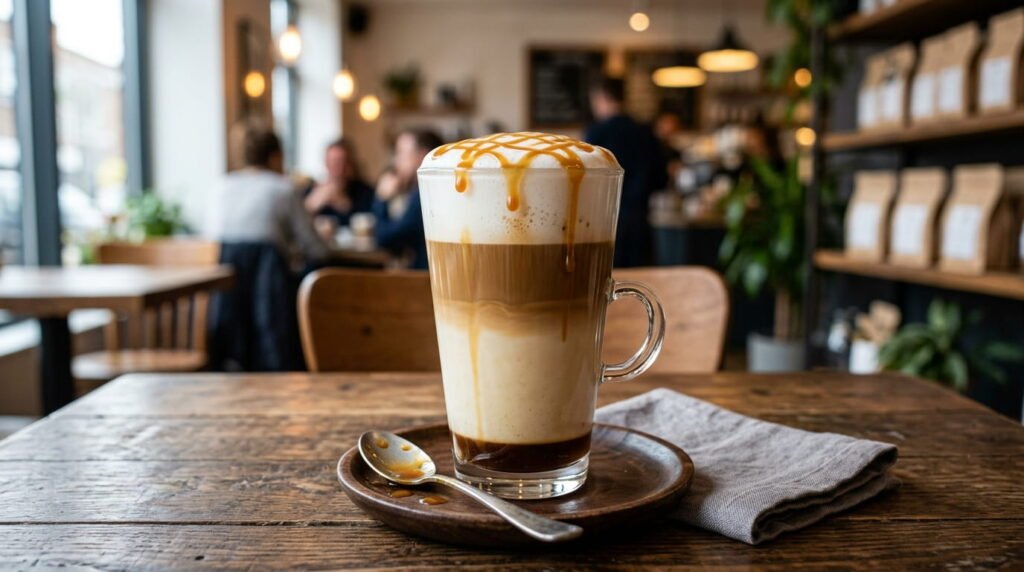
Here’s the piece almost no one tells you: the caramel macchiato isn’t an Italian invention. It was created by Starbucks in 1996 to celebrate the company’s 25th anniversary. It was initially planned as a limited-time item. Instead, it became one of their most ordered drinks globally and never left the menu.
A caramel macchiato is technically a latte macchiato — milk first, espresso second — with vanilla syrup added to the milk and a caramel drizzle on top. The result is sweet, visually layered, and far removed from the original espresso-forward macchiato. The two drinks share a name and almost nothing else.
This distinction matters when you’re ordering. If you want something bold and traditional, ask for a caffè macchiato or an espresso macchiato. If you want something sweet, milky, and visually striking, the caramel macchiato is the order. Both are legitimate — just don’t confuse them.
What Does a Macchiato Taste Like?
A traditional espresso macchiato tastes like a very good espresso with its sharpest edges smoothed down. The dominant notes are rich, roasty, and slightly bitter — exactly what you’d expect from quality espresso. The milk doesn’t sweeten the drink or make it creamy. It just softens the acidity by a fraction and adds the faintest creamy texture on the palate.
If you find straight espresso too intense and lattes too diluted, the macchiato is exactly what sits between them. It’s the most espresso-forward milk drink you can order — and for serious coffee drinkers, that’s the entire appeal.
Honest first impression The first macchiato I ever ordered, I expected something in between a latte and an espresso. What I got was essentially espresso wearing a thin sweater. It took a second to adjust — but after that first sip settled, I understood why this is considered one of the purest coffee drinks. You taste the bean, the roast, the extraction. The milk is barely a whisper. For anyone who really loves coffee, that’s exactly the point.
Macchiato vs. Latte vs. Cappuccino — What’s the Real Difference?
All three drinks start with the same two ingredients: espresso and milk. The difference is purely in the ratio, the preparation, and the result. No competitor currently offers a clean three-way comparison — here it is.
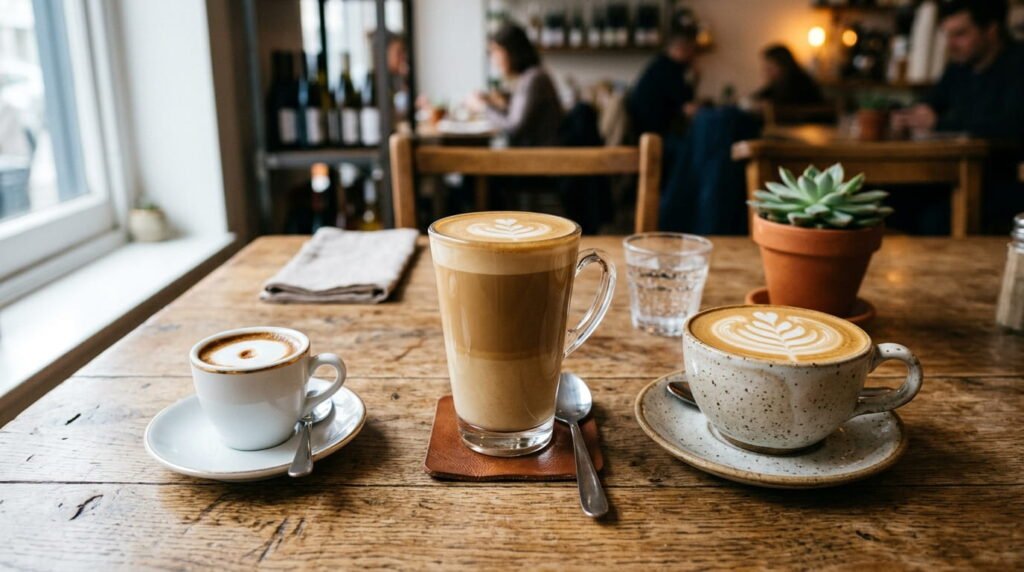
| Category | Macchiato | Latte | Cappuccino |
|---|---|---|---|
| Espresso-to-Milk Ratio | 4:1 (espresso dominates) | 1:3 (milk dominates) | 1:1:1 (equal thirds) |
| Serving Size | 2–3 oz | 10–12 oz | 5–6 oz |
| Milk Texture | Foam dollop only | Steamed milk + thin foam | Equal steamed milk + thick foam |
| Flavor Profile | Bold, intense, slightly creamy | Smooth, mellow, milky | Balanced, creamy, rich |
| Caffeine (per serving) | ~85mg | ~173mg (16oz) | ~173mg (16oz) |
| Calories (plain) | 10–25 | ~170 (whole milk) | ~120 (whole milk) |
| Best Time | Afternoon | Any time | Morning |
| Who It’s For | Espresso purists | Creamy, customizable lovers | Balanced milk-coffee fans |
If you’re comparing Dunkin’s espresso options side by side, their Latte Menu lays out all the flavors, sizes, and prices clearly — useful reference when deciding between a macchiato and a latte at the counter.
Ordering a Macchiato in Italy vs. America — What You’ll Actually Get
This is the section no one writes clearly, and it’s the source of endless frustration for coffee drinkers who travel or switch between café types.
In Italy: You will receive a tiny cup — roughly 2 oz — with a shot of espresso and a small mark of milk foam. It’s consumed in two or three sips, usually standing at the bar. No lid, no sleeve, no straw.
In American specialty coffee shops: You’ll often get something close to the traditional version if you specify “espresso macchiato.” But if you just say “macchiato,” many American baristas will assume you want a latte macchiato — a taller, milkier drink served in a glass.
At chains like Dunkin’ or Starbucks: You’re getting a latte macchiato with flavoring — vanilla syrup, caramel drizzle, and a much larger milk-to-espresso ratio. Dunkin’ offers both hot and iced macchiato options on their main menu, which lean toward the American layered style.
Practical Advice
Before ordering, ask your barista: “Do you make it espresso-first or milk-first?” Espresso first = traditional. Milk first = latte macchiato style. That one question eliminates the guesswork entirely.
Neither version is wrong. They’re just different drinks that share a name — and knowing which one you actually want makes the ordering experience far less confusing.
How to Make a Macchiato at Home
Making a proper espresso macchiato at home is genuinely simple once you understand the proportions. The only challenge is the milk — frothing a very small amount requires a slightly different approach than frothing a full pitcher.
What you need: An espresso machine or Moka pot, whole milk (or oat/almond for non-dairy), and a small milk pitcher or container.
Step 1: Pull a single or double shot of espresso into a small prewarmed cup. The cup size matters — use a 3oz demitasse, not a mug.
Step 2: Pour about 1.5–2 oz of cold milk into the smallest pitcher you own. This is important: too little surface area and your steam wand can’t create proper foam. Steam it to 140–150°F (60–65°C). You want foam with a thick, velvety texture — not bubbles.
Step 3: Scoop a single spoonful of foam onto the surface of the espresso. Don’t pour — spoon. You want just enough to mark the surface, not mix into the drink.
No espresso machine? A Moka pot brewed at double concentration works well. Froth your milk with a handheld frother or by shaking warm milk in a jar. It won’t be identical, but it’ll get you close.
Home barista tip The biggest mistake people make at home is using a full pitcher of milk for a macchiato and ending up with way more foam than the drink needs. Start with just enough for the drink you’re making. The small pitcher forces you to be precise — and precision is what this drink is all about.
Macchiato Nutrition — Calories and Caffeine Explained
The numbers look different across macchiato types because the drinks themselves are so different. Here’s what the data actually means for a real person choosing their order.
~85mgCaffeine (Traditional, 2oz)
10–25Calories (Traditional)
~250+Calories (Caramel Macchiato)
4:1Espresso-to-Milk Ratio
| Type | Calories | Caffeine | Sugar | Fat |
|---|---|---|---|---|
| Espresso Macchiato (traditional) | 10–25 cal | ~85mg | 0g | ~0.5g |
| Latte Macchiato (12oz, whole milk) | ~150 cal | ~85–170mg | ~12g (natural) | ~6g |
| Caramel Macchiato (chain, 16oz) | ~250 cal | ~150mg | ~33g | ~7g |
What the numbers mean in plain terms: a traditional espresso macchiato is one of the lowest-calorie coffee drinks you can order — essentially espresso with a negligible amount of milk. If you’re calorie-conscious, it’s one of the best choices on any menu. The caramel macchiato, on the other hand, carries sugar levels close to a dessert — the caramel drizzle and vanilla syrup add up quickly.
For a full breakdown of Dunkin’s espresso-based drinks and their nutritional values, the Dunkin’ Nutrition page and the Dunkin’ Calorie Calculator make it easy to check any specific item before you order.
Caffeine-wise, the traditional macchiato has roughly half the caffeine of a 16oz latte or cappuccino — because you’re drinking far less liquid, not less espresso. If caffeine per ounce is your metric, the macchiato wins by a large margin.
Frequently Asked Questions
What is a macchiato?
An espresso drink “stained” with a small amount of milk or foam — bold, small, and Italian in origin. The traditional version is 2–3 oz with espresso firmly in the lead.
Is a macchiato stronger than a latte?
Yes. A macchiato uses far less milk, so the espresso flavor dominates. A latte uses 3x more milk, which softens and dilutes the espresso significantly. Same caffeine per shot, very different experience.
What’s the difference between a macchiato and a caramel macchiato?
Almost everything. A traditional macchiato is 2–3 oz of espresso with a spot of foam. A caramel macchiato is a Starbucks invention from 1996 — a tall, sweet latte macchiato with vanilla syrup and caramel drizzle. They share a name, not a recipe.
How much caffeine is in a macchiato?
About 85mg per 2oz serving (single espresso shot). A double-shot macchiato has roughly 170mg. The small size makes the caffeine concentration per ounce very high — but the total is lower than a large latte.
Can I make a macchiato without an espresso machine?
Yes — use a Moka pot brewed at double strength as the espresso base, and froth a small amount of milk with a handheld frother. The result won’t be identical, but it captures the spirit of the drink well.
What time of day should I drink a macchiato?
Traditionally, it’s an afternoon drink in Italy — strong enough to be satisfying but with just enough milk to avoid the heaviness of a morning cappuccino. That said, drink it whenever you want bold coffee.
The Bottom Line
One of the most misconceived drinks in the coffee world is a macchiato, not because it is a complex drink, but by the fact that the name has been applied to everything between a 2oz Italian ritual drink of espresso to a 20oz American dessert drink. Being aware of the difference alters the order in which you arrange and the experience that you have.
The traditional version is honest, direct, and completely espresso-forward. The latte macchiato is a visual spectacle with a gentler flavor. The caramel macchiato is a sweet, modern creation that happens to share the name. All three have their place — the key is knowing which one you actually want before you step up to the counter.
If you’re curious what Dunkin’ has to offer across their full espresso range — from macchiatos and lattes to iced and frozen options — the full Dunkin’ menu covers everything with current prices. And if you’re watching your spend, the Dunkin’ promo codes page is worth checking before your next order.
Sources: Healthline — Cappuccino vs Latte vs Macchiato (nutrition & caffeine data); Trade Coffee — espresso macchiato preparation; Nescafé UK — macchiato history & positioning; Canal Coffee Company — ratio and calorie data. External references: Healthline caffeine comparison | FDA Daily Values.


One Comment